How Accounting and Bookkeeping Services Help Businesses Stay Organized
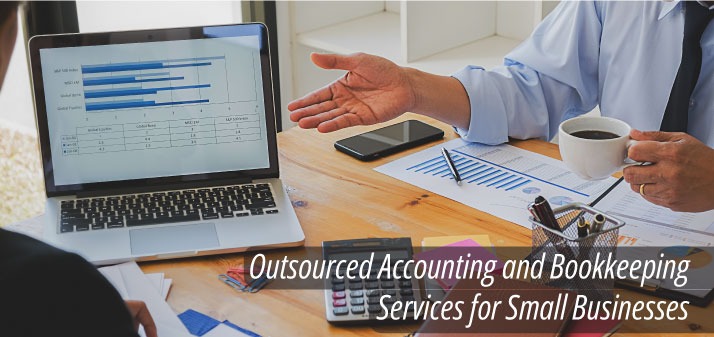
Outsourced Accounting and Bookkeeping Services
Running a small business in the USA means wearing multiple hats every single day. Between managing clients, handling operations, and driving growth, accounting is one function that quietly demands more time and attention than most owners expect. A single missed reconciliation, an incorrect payroll entry, or a late tax filing can lead to IRS penalties, cash flow problems, or worse a distorted picture of your own business health.
That is exactly why thousands of small businesses across the USA are moving toward outsourced accounting and bookkeeping services. Rather than hiring a full-time in-house accountant which can cost $55,000–$75,000 per year in salary alone — outsourcing gives you access to a dedicated team of qualified professionals at a fraction of the cost.
In this guide, we cover everything small business owners need to know: what outsourced bookkeeping actually includes, how much it costs, when to make the switch, and how to choose the right partner.
What Are Outsourced Accounting and Bookkeeping Services?
Outsourced accounting and bookkeeping means hiring an external team of financial professionals to handle your company's day-to-day financial tasks — remotely, using secure cloud-based accounting software like QuickBooks, Xero, or FreshBooks.
Unlike hiring a part-time bookkeeper who works on-site, an outsourced team operates as a dedicated extension of your business. They work behind the scenes to ensure your books are always clean, up-to-date, and audit-ready — without occupying desk space or adding to your payroll headcount.
Core services typically included:
- Daily transaction recording and categorization
- Accounts payable and accounts receivable management
- Bank and credit card reconciliations (monthly)
- Payroll processing and compliance
- Financial statement preparation (P&L, balance sheet, cash flow)
- Tax preparation support and quarterly filings
- Cash flow monitoring and forecasting
- 1099 and W-2 preparation for contractors and employees
All of this is delivered through encrypted, cloud-based platforms that give you real-time visibility into your finances — anytime, from anywhere.
Why Small Businesses in the USA Are Choosing to Outsource Accounting
1. Significant Cost Savings vs. In-House Hiring
The true cost of a full-time in-house bookkeeper or accountant goes beyond salary. According to the U.S. Bureau of Labor Statistics, the median annual wage for bookkeeping clerks is approximately $45,860. Add employer taxes (7.65% FICA), health insurance, paid time off, and software licenses — the real cost exceeds $60,000 per year.
Outsourced bookkeeping for a small business typically costs $300–$1,200 per month depending on transaction volume and service scope. That is a savings of $45,000–$55,000 per year while gaining access to a full team rather than a single employee.
2. Access to a Full Team of Qualified Professionals
When you hire one in-house bookkeeper, you get one person's knowledge base. When you outsource, you get a team — bookkeepers, accountants, CPAs, and tax specialists — who collectively cover every corner of your financial management.
This team stays current with IRS regulations, state-specific tax laws, GAAP standards, and payroll compliance rules across all 50 states. You do not have to worry about knowledge gaps or coverage during vacations and sick days.
3. More Time to Focus on Growing Your Business
A 2023 survey by Wasp Barcode Technologies found that 40% of small business owners spend more than 80 hours per year on federal taxes alone — and that does not include day-to-day bookkeeping. Outsourcing reclaims that time and redirects it toward sales, customer relationships, and product development.
4. Dramatically Reduced Risk of Costly Errors
IRS penalties for late or inaccurate payroll tax deposits start at 2% for deposits 1–5 days late and climb to 15% for amounts more than 10 days past due. Professional outsourced teams use dedicated review processes and cross-checks to eliminate these errors before they happen.
5. Scalable as Your Business Grows
A startup processing 50 transactions per month has completely different needs than a growing business handling 500. Outsourced services scale with you — you can add payroll processing, sales tax filing, or CFO-level advisory services as your needs evolve, without hiring additional staff.
What Does the Outsourced Bookkeeping Process Look Like?
Here is exactly how outsourced accounting works for a small business, step by step:
Step 1 — Onboarding and Books Cleanup Your outsourced team reviews your current financial records, identifies any discrepancies or backlog, and cleans up your books so they are accurate from day one. If you are switching from DIY bookkeeping, this typically takes 1–2 weeks.
Step 2 — Connect Your Accounts Bank accounts, credit cards, payment processors (Stripe, PayPal, Square), and payroll platforms are securely connected to your cloud accounting software. All transactions sync automatically.
Step 3 — Daily and Weekly Transaction Management Every transaction is recorded, categorized, and matched. Your team handles vendor invoices, customer payments, and expense receipts on a rolling basis — so nothing falls through the cracks at month-end.
Step 4 — Monthly Reconciliation and Reporting At the end of each month, your team reconciles every bank and credit card account, prepares your profit and loss statement, balance sheet, and cash flow report, and flags anything that needs your attention.
Step 5 — Tax and Compliance Support Your outsourced accountants coordinate with your CPA or handle quarterly estimated tax payments, payroll tax filings (Form 941), and annual filings (W-2s, 1099s) — ensuring you never miss a deadline.
Step 6 — Ongoing Financial Visibility You get access to real-time dashboards and scheduled reporting calls — so you always know exactly where your business stands financially, without having to dig through spreadsheets yourself.
Key Outsourced Bookkeeping Services Explained
Accounts Payable and Receivable Management
Late payments from clients and delayed vendor payments are two of the top cash flow killers for small businesses. Your outsourced team manages your invoicing cycle — sending invoices, following up on overdue payments, and scheduling vendor payments on time — keeping your cash flow healthy and predictable.
Bank and Credit Card Reconciliation
Every month, your bookkeeper matches every transaction in your accounting software against your actual bank and credit card statements. This process catches duplicate entries, missed transactions, and unauthorized charges — giving you 100% confidence that your books reflect reality.
Payroll Processing and Compliance
Payroll management is one of the most compliance-heavy tasks for small businesses. Federal and state payroll taxes, overtime rules, and employee classification requirements all change regularly. Your outsourced payroll team handles salary calculations, direct deposits, tax withholding, and quarterly and annual filings — including Form 941, FUTA, state unemployment, and year-end W-2s.
Financial Statement Preparation
Every month, you receive three core financial reports: a Profit & Loss statement (are you making money?), a Balance Sheet (what do you own and owe?), and a Cash Flow Statement (where is your money going?). These reports become the foundation for every major business decision — pricing, hiring, expansion, and loan applications.
Tax Preparation and Filing Support
Your outsourced accounting and bookkeeping team maintains clean, organized records year-round — which dramatically reduces your tax preparation time and CPA fees. They coordinate all documentation for your annual return, track deductible business expenses, and prepare contractor 1099s well before the January 31 deadline.
How Outsourced Accounting Keeps Small Businesses Compliant
Tax regulations and financial compliance requirements are among the most stressful aspects of running a small business. An experienced outsourced team protects you by:
- Calculating and remitting payroll taxes on time, every pay cycle
- Filing quarterly Form 941 reports with the IRS
- Tracking state-specific sales tax obligations across multiple jurisdictions
- Maintaining organized records for potential audits (IRS recommends keeping financial records for 3–7 years)
- Ensuring your contractor vs. employee classifications follow IRS guidelines — misclassification penalties can exceed $20,000 per worker
Compliance is not optional. Having a dedicated team whose job is to stay current with these requirements is one of the strongest arguments for outsourcing.
How to Choose the Right Outsourced Accounting Partner
Not all outsourced bookkeeping firms are equal. When evaluating providers, small businesses should look for:
Industry experience — Does the provider work with businesses in your industry? Accounting for a retail business is very different from a service firm or an e-commerce company.
Qualified team — Are their bookkeepers and accountants certified? Look for CPAs, Enrolled Agents (EAs), or QuickBooks ProAdvisors on the team.
Data security — Financial data is sensitive. Ask whether the firm is ISO 27001 certified, uses encrypted file transfer protocols, and requires NDAs from all staff.
Software compatibility — Does the provider work with the accounting software you already use (QuickBooks, Xero, FreshBooks)? Switching platforms mid-stream creates unnecessary disruption.
Transparent pricing — Good providers offer clear, fixed monthly pricing based on transaction volume or service scope — not hourly billing that creates unpredictable invoices.
Communication and reporting — You should receive monthly reports and have a dedicated point of contact for questions. Ask about response time commitments before signing.
A reliable outsourced accounting partner operates as a true extension of your business — not just a vendor who processes transactions and disappears.
Is Outsourcing Accounting Right for Your Small Business?
Outsourced bookkeeping and accounting is a particularly strong fit for:
- Startups and early-stage businesses that cannot justify a full-time hire but need clean books from day one
- Solopreneurs and freelancers spending too many hours on financial admin instead of billable work
- Growing small businesses (5–50 employees) with increasing payroll and compliance complexity
- E-commerce businesses with high transaction volumes across multiple platforms (Shopify, Amazon, Etsy)
- Businesses preparing for a loan or investor who need clean, professionally prepared financials
- Business owners who have fallen behind on bookkeeping and need a full catch-up before tax season
If you answered yes to any of these, outsourcing is not just an option — it is likely the most financially sound decision you can make this year.
People Also Ask
How much do outsourced bookkeeping services cost for a small business?
Outsourced bookkeeping for small businesses typically costs $300–$1,200 per month, depending on the volume of transactions, the number of bank accounts, and the scope of services (basic bookkeeping vs. full-service accounting including payroll and tax support). Most providers offer tiered packages — a startup with 100 transactions per month will pay significantly less than a business processing 600+ monthly transactions.
What is the difference between bookkeeping and accounting?
Bookkeeping is the day-to-day recording and organizing of financial transactions — recording income and expenses, reconciling bank accounts, and categorizing entries. Accounting takes that data further: analyzing it, preparing financial statements, identifying tax strategies, and providing financial advice. Outsourced firms typically offer both, giving small businesses a complete financial function in one package.
Is outsourced bookkeeping safe? How is my data protected?
Reputable outsourced accounting firms use bank-grade encryption for all data transfers, store financial records on secure cloud platforms, require all staff to sign Non-Disclosure Agreements (NDAs), and many hold ISO 27001:2013 certification — the international standard for information security management. Always verify these measures before sharing financial access.
Can outsourced accountants handle payroll for my small business?
Yes. Most full-service outsourced accounting providers include payroll processing as part of their offering, or as an add-on service. This covers salary calculations, direct deposit, federal and state tax withholding, quarterly Form 941 filings, and year-end W-2 and 1099 preparation.
How quickly can an outsourced bookkeeping team get started?
Most providers can onboard a new small business client within 1–2 weeks. The process involves connecting your bank accounts and accounting software, reviewing your existing books, and establishing a monthly reporting schedule. If there is significant backlog, catch-up bookkeeping may take an additional 2–4 weeks before your books are fully current.
Final Thoughts
Managing your own books might feel manageable when you are just starting out. But as your business grows — more clients, more transactions, more compliance obligations — the cost of doing it yourself grows too: in time, in errors, and in opportunities missed while you are buried in spreadsheets.
Outsourced accounting and bookkeeping services give small business owners a clean financial foundation, professional compliance management, and the bandwidth to focus on what actually grows the business.
Whether you are a startup looking to build clean books from day one, or an established small business ready to stop doing your own accounting, the right outsourced partner makes a measurable difference — from the first month.
Ready to simplify your finances and scale with confidence?
AccuPride provides reliable Outsourced Accounting and Bookkeeping Services built specifically for small businesses across the USA. Our team of qualified accountants handles your books, payroll, tax compliance, and financial reporting — so you can focus entirely on growing your business.
Contact to get started with a free consultation.